Alliteration is a simple writing technique that can make words sound more memorable, playful, and powerful. It happens when nearby words begin with the same sound.
A phrase such as “wild winds whistle” is a clear example because several words begin with the repeated w sound.
People often search for an alliteration definition because they see the term in English classes, poetry lessons, advertising, song analysis, and writing guides. It is also common in brand names, social media captions, speeches, books, and everyday expressions.
Understanding alliteration is useful even if you are not studying literature. It can help you recognize why certain phrases are easy to remember and why some sentences sound more rhythmic than others.
This guide explains the meaning, background, online usage, related terms, common misconceptions, and practical uses of alliteration in clear and simple English.
Meaning & Definition
What Does Alliteration Mean?
Alliteration is the repetition of the same or similar beginning sound in two or more words placed close together.
For example:
“Bright butterflies bounced by.”
The repeated b sound creates alliteration.
The important point is that alliteration is mainly based on sound, not simply the first written letter. Words can sometimes start with different letters but still produce similar sounds. On the other hand, words beginning with the same letter may not always create strong alliteration if their pronunciation is different.
Alliteration often makes a sentence sound rhythmic and easy to remember. Writers use it to draw attention to an idea, create a mood, add humor, or make language feel more creative.
Simple Alliteration Examples
Some easy examples include:
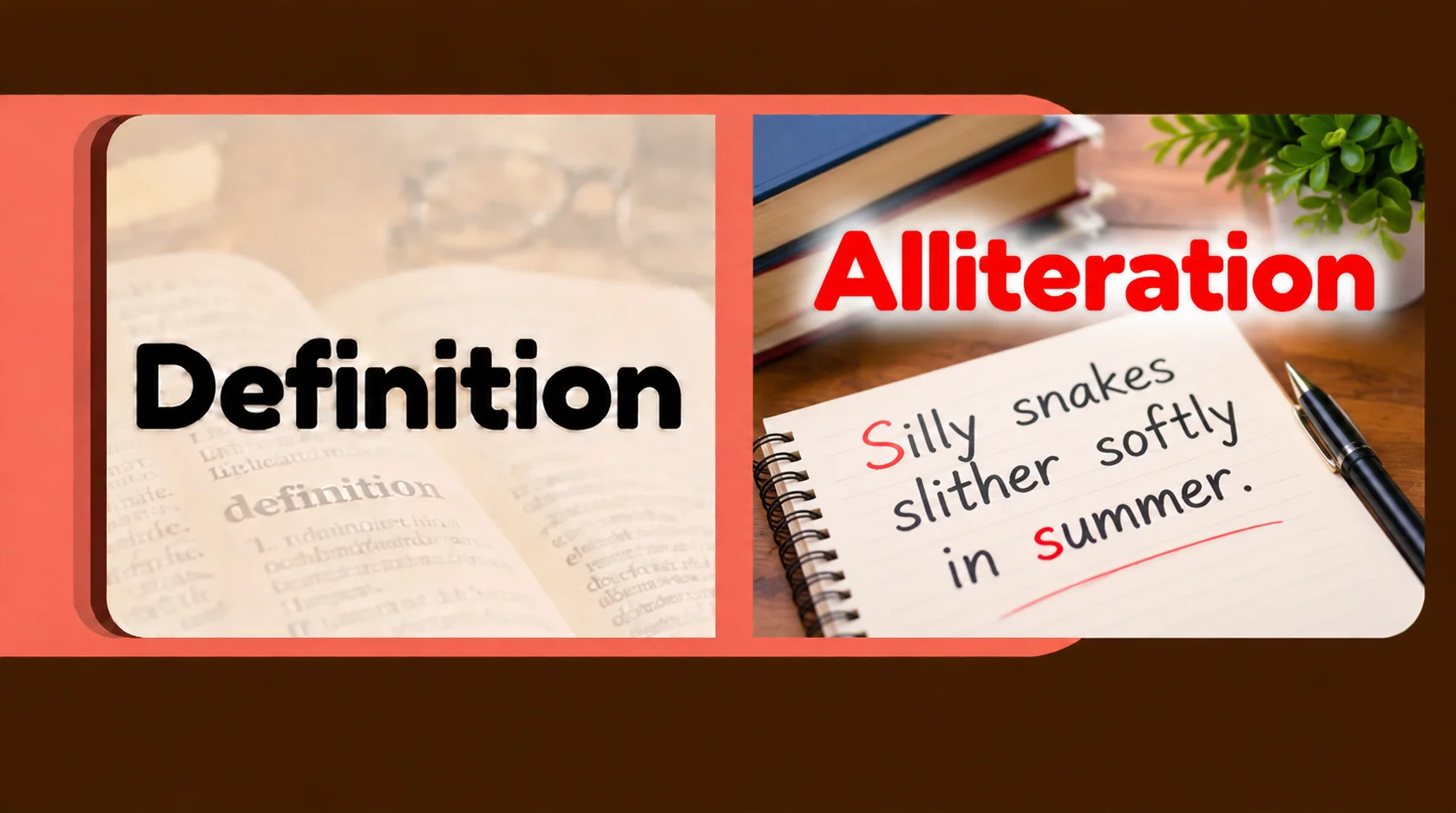
- Silly snakes slide slowly.
- Busy bees buzz brightly.
- Peter picked purple peppers.
- Cool cats create chaos.
- Tiny turtles travel together.
These examples repeat opening sounds without needing complicated vocabulary.
Alliteration is especially common in poetry, children’s books, tongue twisters, slogans, headlines, and advertisements.
It does not require every word in a sentence to begin with the same sound. Even two or three nearby words can create noticeable alliteration.
Background
Where Did Alliteration Come From?
Alliteration has been used in spoken and written language for centuries. Long before modern novels and social media existed, storytellers used repeated sounds to make lines easier to remember.
This was especially helpful when stories and poems were passed from one person to another through speech rather than books.
Early English poetry frequently used alliteration as part of its structure. Instead of depending entirely on rhyme at the ends of lines, poets repeated sounds near the beginning of important words.
Over time, writers continued using the technique in poetry, plays, stories, speeches, and everyday expressions.
Why Writers Still Use It
Alliteration remains popular because humans naturally notice patterns.
Compare these two phrases:
“A storm crossed the sea.”
“A sudden storm swept across the sea.”
Both communicate a similar idea, but the second version has a stronger rhythm because of the repeated s sound.
Modern advertisers, journalists, authors, comedians, and content creators use the same principle. A repeated sound can make a headline or slogan easier to notice and remember.
Usage in Different Contexts
Alliteration in Writing and Speech
Alliteration works in many forms of communication.
In poetry, it can create rhythm or emphasize an emotion.
In fiction, authors may use it when describing characters, places, or actions. A phrase such as “dark doors disappeared into the distance” gives a description a stronger sound pattern.
Public speakers can use alliteration to make important ideas more memorable. Repeated sounds often give a phrase a polished and confident rhythm.
Advertising is another common area. Businesses often like short phrases with repeated sounds because they can be catchy.
Professional Uses
Alliteration may appear in:
- Marketing slogans
- Presentation titles
- Article headlines
- Product names
- Campaign names
- Educational materials
- Business presentations
However, professional writers usually use it carefully. Too much alliteration can make serious writing sound forced or childish.
A small amount can add energy. Too much can distract from the actual message.
Meaning in Chat, WhatsApp, Instagram, and TikTok
How Alliteration Appears Online
The word alliteration does not normally have a separate slang meaning in texting. When someone mentions alliteration in a chat, they usually mean the normal language technique of repeating beginning sounds.
For example, someone might send:
“Lazy late-night laughs 😂”
Another person could reply:
“Nice alliteration!”
They are simply pointing out that several words begin with the same l sound.
On WhatsApp or other messaging apps, people may use alliteration naturally without thinking about grammar.
Examples include:
“Movie marathon Monday.”
“Coffee, chaos, and conversations.”
“Friday food fest.”
Instagram and TikTok Usage
Alliteration can work particularly well in social captions because short, rhythmic wording is easy to scan.
Examples might include:
“Sunny Sunday smiles ☀️”
or
“Beach breeze bliss 🌊”
TikTok creators may also use alliteration in video titles, usernames, recurring content series, or hashtags.
It is not a special TikTok abbreviation or hidden internet code. It remains a writing technique, even when used casually online.
Meaning in Physics, Medical, and Aircraft Terminology
Does Alliteration Have a Technical Meaning?
Alliteration does not normally have a separate scientific definition in physics, medicine, or aviation.
In these fields, the word usually keeps its standard language meaning.
A physics teacher, for instance, could use an alliterative phrase such as “powerful particle patterns” to make a lesson memorable. The phrase contains scientific words, but alliteration itself is still a language technique.
Medical Usage
Medical professionals may occasionally use memorable phrases with repeated sounds when teaching students or creating educational material.
However, alliteration is not a medical diagnosis, treatment, disease, or standard medical process.
If the word appears in medical writing, it will normally refer to wording or communication style.
Aircraft and Aviation Usage
The same applies to aircraft terminology.
Alliteration is not usually an aviation system, aircraft component, navigation method, or flight procedure. An aviation writer could use an alliterative headline such as “Fast Flights for Fall,” but the meaning remains literary.
Context is important because similar-looking technical terms can sometimes cause confusion.
Common Misconceptions
Alliteration Is Not Just Repeating Letters
One common mistake is thinking alliteration means several words must begin with exactly the same written letter.
Sound matters more.
The goal is repetition of a noticeable starting sound.
Alliteration and Rhyme Are Different
Rhyme normally involves similar sounds at the end of words.
For example:
Light / night
Alliteration focuses mainly on beginning sounds:
Little lights linger.
The two techniques can appear together, but they are not the same thing.
Every Word Does Not Need to Match
A sentence can contain other words between the repeated sounds.
For example:
“The bright sun burned above the beach.”
The repeated b sound in bright, burned, and beach can still create alliteration.
It Is Not Only for Poetry
Poetry is famous for using alliteration, but the technique also appears in everyday conversation, advertising, songs, jokes, headlines, children’s books, and social media.
Similar Terms & Alternatives
Assonance
Assonance involves repeating vowel sounds within nearby words.
For example:
“The light of the fire.”
The sound pattern is different from alliteration because the repeated sound does not have to appear at the beginning.
Consonance
Consonance involves repeating consonant sounds within or at the ends of nearby words.
It is broader than alliteration.
Rhyme
Rhyme uses matching or similar sounds, usually near the ends of words.
Examples include:
Day / play
Moon / tune
Repetition
Repetition means deliberately repeating a word, phrase, sound, or idea.
Alliteration is therefore a type of sound repetition, but not every example of repetition is alliteration.
How to Respond to It
When Someone Points Out Alliteration
If someone says, “That’s alliteration,” they are usually identifying the repeated opening sounds in your sentence.
You could simply respond:
“Yes, I used it to make the line catchy.”
Or:
“Good catch! The repeated sound gives it rhythm.”
In casual conversations, no formal explanation is necessary.
When Someone Asks What It Means
A quick answer can be:
“Alliteration is when nearby words start with the same or similar sound.”
You can then give a simple example:
“Funny frogs flip.”
That is often enough to explain the idea clearly.
Differences From Similar Words
Alliteration vs Assonance
Alliteration repeats opening consonant sounds.
“Big brown bears.”
Assonance repeats vowel sounds.
The main difference is the type and position of the repeated sound.
Alliteration vs Consonance
Alliteration usually focuses on sounds at the beginnings of words.
Consonance can involve repeated consonant sounds in different positions.
For this reason, alliteration can be considered more specific.
Alliteration vs Rhyme
Alliteration:
“inexplicable cats climb.”
Rhyme:
“Cat in a hat.”
One emphasizes beginning sounds, while the other commonly emphasizes matching ending sounds.
Alliteration vs Repetition
Repetition may involve using the exact same word several times:
“Go, go, go!”
Alliteration uses different words with similar starting sounds:
“Goofy goats giggle.”
Knowing these differences makes it much easier to identify literary techniques correctly.
Relevance in Online Conversations & Dating Apps
Making Messages More Memorable
Alliteration can make online language feel playful and creative.
Someone might write:
“Sunday snacks and sunshine.”
or:
“Late-night laughs.”
These short phrases work well because they are easy to read and have a natural rhythm.
Dating App Bios and Messages
Alliteration can also appear in dating profiles, prompts, or opening messages.
A profile might say:
“Coffee, concerts, and cozy weekends.”
Another person might write:
“Dog dad, dessert defender, and daytime dreamer.”
These phrases can add personality without requiring long descriptions.
However, alliteration itself has no secret dating meaning. If someone uses repeated starting sounds on Tinder, Bumble, Hinge, or another dating platform, they are usually just being playful with language.
Used naturally, it can make a bio or conversation more memorable. If every sentence uses it, however, the wording may start to feel forced.
Frequently Asked Questions
What is a simple definition of alliteration?
Alliteration is the repetition of the same or similar starting sound in nearby words, such as “busy bees buzz.”
What is an example of alliteration?
“Silly snakes slide slowly” is an example because several words begin with the repeated s sound.
Is alliteration based on letters or sounds?
It is mainly based on sounds. The pronunciation of words matters more than simply having the same first written letter.
Why do authors use alliteration?
Authors use it to create rhythm, highlight important words, improve memorability, establish mood, or make a sentence more enjoyable to read.
Is alliteration the same as rhyme?
No. Alliteration usually repeats sounds at the beginnings of words, while rhyme usually involves similar sounds near the ends of words.
Can alliteration be used in normal conversation?
Yes. People often create alliterative phrases naturally in jokes, captions, names, casual conversations, slogans, and online posts.
Is alliteration a figure of speech?
It is commonly described as a literary or sound device. It helps writers shape the sound and rhythm of language for a particular effect.
Conclusion
Alliteration is one of the simplest ways to make language more rhythmic, memorable, and engaging. It happens when nearby words begin with the same or similar sound, as in “bright blue butterflies.”
Although it is strongly associated with poetry and literature, alliteration appears almost everywhere. Writers use it in books, advertisements, headlines, speeches, social media captions, jokes, brand names, and casual conversations.
It should not be confused with rhyme, assonance, consonance, or ordinary repetition. Each technique works differently, even though all of them involve sound patterns in some way.
Alliteration also has no special slang meaning on WhatsApp, Instagram, TikTok, or dating apps, nor does it normally have a separate technical meaning in medical, physics, or aviation contexts.
Once you understand the basic idea, identifying alliteration becomes easy: listen for repeated beginning sounds and notice the rhythm they create.

Alex Chuckles is a comedy writer and humor enthusiast who loves creating funny and entertaining content for readers worldwide. He is passionate about spreading laughter and making people smile through creative jokes and lighthearted stories.