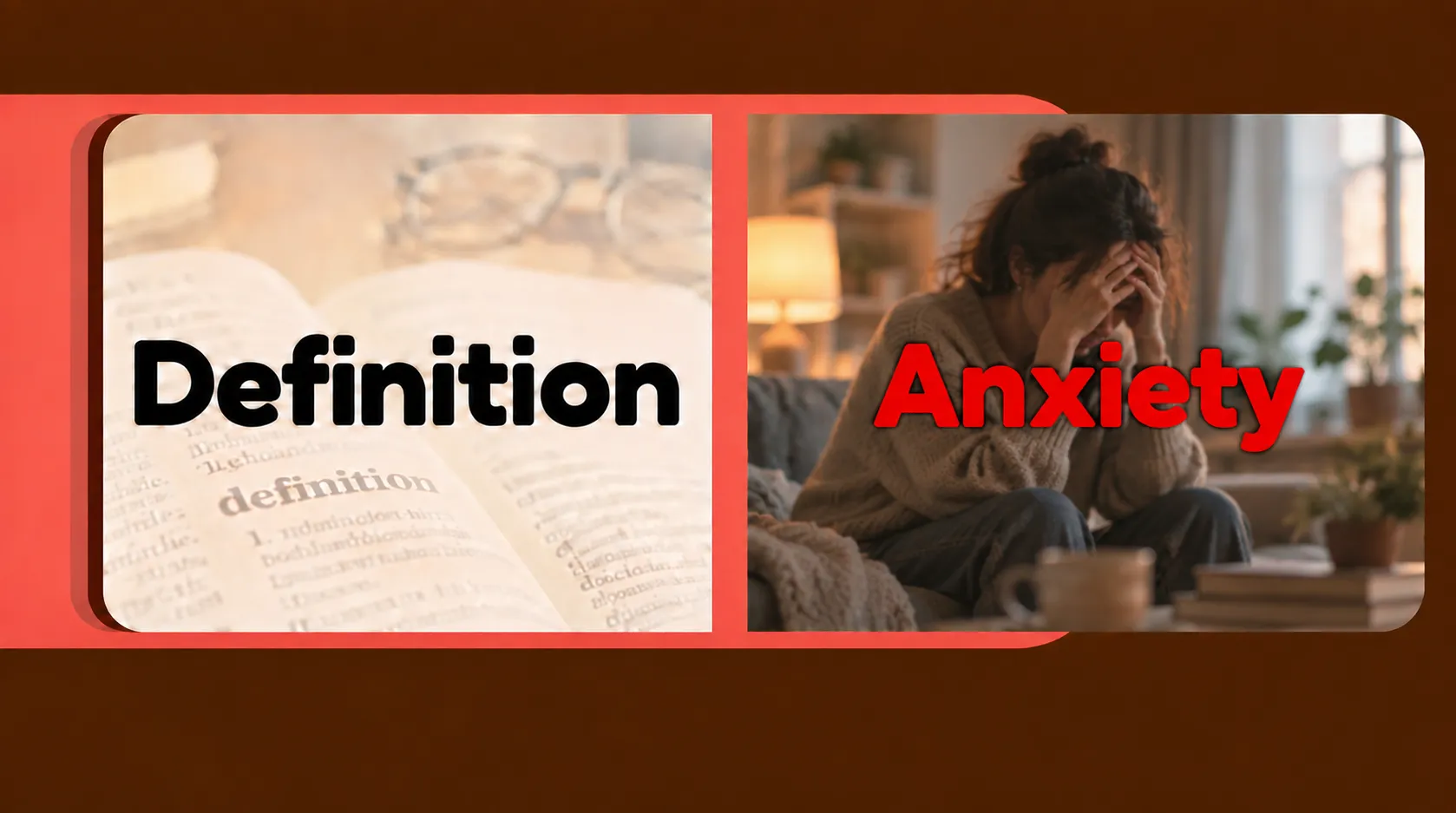
Anxiety is a word people often use when they feel worried, nervous, uncertain, or under pressure. It can describe a normal emotional response to a difficult situation, such as waiting for exam results, attending an interview, speaking in public, or dealing with an important life change.
In some cases, however, anxiety can become frequent, intense, or difficult to control and may interfere with everyday life.
People search for an anxiety definition for many reasons. Some want to understand a feeling they are experiencing, while others encounter the term in conversations, social media posts, medical discussions, or relationship advice.
Because the word can appear in both casual and professional settings, its exact meaning may depend on context.
This guide explains what anxiety means, where the term comes from, how people use it online and offline, common misunderstandings, related words, and how to respond when someone says they are feeling anxious.
Anxiety Meaning & Definition
What Does Anxiety Mean?
Anxiety is a feeling of worry, nervousness, fear, or uneasiness about something that may happen or something that feels uncertain. It often appears when a person expects a challenge, problem, danger, or important event.
For example, someone might say:
“I have anxiety about tomorrow’s presentation.”
In this case, the person is expressing worry or nervousness about an upcoming event.
Anxiety is not always abnormal. Mild anxiety can occur naturally before exams, job interviews, first dates, travel, medical appointments, or major decisions. The body and mind may become more alert because the person believes something important is about to happen.
Anxiety as an Emotional State
Anxiety can involve both mental and physical experiences. Mentally, a person may feel worried, restless, distracted, or unable to stop thinking about possible problems.
Physical experiences may sometimes include a faster heartbeat, sweating, shaking, muscle tension, an unsettled stomach, or difficulty relaxing.
The word can therefore describe anything from temporary nervousness to a more persistent pattern that may require professional attention.
It is important to distinguish ordinary anxiety from an anxiety disorder. Feeling anxious occasionally does not automatically mean someone has a medical condition.
Background of the Word Anxiety
Where the Meaning Comes From
The concept of anxiety has existed for centuries because worry, fear, and uncertainty are universal human experiences. The English word developed from older terms connected with distress, uneasiness, and mental discomfort.
Over time, its meaning became broader.
In everyday language, anxiety came to describe emotional tension or worry. In psychology and medicine, the term developed a more specific role when professionals began studying how persistent fear and worry affect behavior, health, relationships, and daily functioning.
How Its Use Has Changed
Today, anxiety appears far beyond medical textbooks. People regularly discuss it in schools, workplaces, online communities, podcasts, videos, dating conversations, and social media posts.
A sentence such as:
“That meeting is giving me anxiety.”
may simply mean:
“That meeting is making me very nervous.”
However, someone saying:
“I have been diagnosed with an anxiety disorder.”
is using the term in a medical sense.
Understanding the surrounding context helps determine which meaning is intended.
Anxiety in Different Contexts
Anxiety has slightly different meanings depending on where it appears.
Everyday Conversation
In normal conversation, anxiety usually means nervousness, worry, stress, or uneasiness.
Someone might say:
“I get anxiety before flying.”
This means flying causes them to feel worried or nervous.
Social Media
On social platforms, people often use anxiety more casually.
Examples include:
“Opening my email inbox gives me anxiety.”
“Waiting for them to text back is pure anxiety.”
Some posts are serious, while others use exaggeration or humor.
Professional Settings
At work, anxiety might refer to nervousness about deadlines, presentations, meetings, performance reviews, workplace changes, or job security.
For example:
“The sudden deadline created anxiety across the team.”
The sentence describes worry or uncertainty rather than necessarily referring to a diagnosed condition.
Psychology and Healthcare
In professional mental-health discussions, anxiety may refer to symptoms involving excessive fear, worry, nervousness, or apprehension.
Healthcare professionals consider factors such as intensity, duration, triggers, and how much symptoms affect everyday functioning.
Anxiety Meaning in Chat, WhatsApp, Instagram, and TikTok
Online conversations have made the word anxiety increasingly common.
Anxiety in Text Messages
In texting, someone might write:
“This is giving me anxiety 😭”
Usually, they mean the situation is making them nervous, uncomfortable, or worried.
Another example is:
“My anxiety is so bad before this interview.”
Here, the speaker may be describing stronger nervousness.
WhatsApp Meaning
On WhatsApp, anxiety carries its normal meaning rather than functioning as an abbreviation or hidden slang term.
For example:
“Sorry I didn’t reply earlier. I was feeling anxious.”
The person may be explaining why they were quiet, delayed, or withdrawn.
Instagram Usage
Instagram captions and comments sometimes use anxiety when discussing emotional wellbeing, stressful situations, social pressure, or personal experiences.
A caption such as:
“Social anxiety makes crowded events difficult for me.”
is usually more serious than a humorous post saying:
“Watching my battery hit 1% gives me anxiety.”
TikTok Usage
TikTok users may discuss anxiety through personal stories, humor, lifestyle content, mental-health education, or relationship conversations.
The word still means worry, fear, nervousness, or uneasiness, but the seriousness varies greatly from one post to another.
Anxiety in Physics, Medical, and Aircraft Terminology
Anxiety in Physics
Anxiety is not normally a technical physics term.
Physics deals with concepts such as energy, force, motion, matter, pressure, electricity, and radiation. When someone uses anxiety while discussing physics, they are usually describing a person’s emotional reaction to the subject.
For example:
“Physics exams give me anxiety.”
Here, anxiety describes the student’s feelings, not a scientific measurement.
Medical Meaning
In medicine and psychology, anxiety has a more specific meaning. It can describe persistent or intense fear, worry, nervousness, or apprehension.
Different anxiety-related conditions can involve different patterns of symptoms.
A professional evaluation may consider how often the feelings occur, how long they last, and whether they interfere with work, school, relationships, sleep, or ordinary activities.
Aircraft and Aviation Meaning
Anxiety is not generally a technical aircraft component or standard flight-system term.
However, flight anxiety is a common expression for fear or nervousness associated with air travel.
A traveler might experience anxiety during takeoff, turbulence, landing, or even before entering the airport.
In this context, the word describes a passenger’s emotional state rather than the aircraft itself.
Common Misconceptions About Anxiety
Several misunderstandings surround the word.
Anxiety Always Means a Disorder
This is incorrect.
People can experience anxiety temporarily without having an anxiety disorder. Feeling nervous before an important event is a common human reaction.
Anxiety and Fear Are Exactly the Same
They are related but not identical.
Fear usually focuses on a clear and immediate threat.
Anxiety often involves anticipation, uncertainty, or worry about something that could happen.
For example, seeing an aggressive dog charging toward you may cause fear. Worrying for several days about encountering aggressive dogs during a future walk may be described as anxiety.
Anxiety Is Just Overthinking
Overthinking can contribute to anxious feelings, but anxiety is broader. It may involve emotional, mental, behavioral, and physical reactions.
People Can Simply Switch It Off
Telling someone to “just stop worrying” may not be helpful, especially when their anxiety feels intense or persistent.
Listening calmly and taking their experience seriously is usually more supportive.
Similar Terms and Alternatives
Several words can express ideas related to anxiety.
Worry
Worry means thinking repeatedly about possible problems.
Example:
“I am worried about tomorrow.”
Nervousness
Nervousness often appears before a particular event.
Example:
“I feel nervous before presentations.”
Uneasiness
Uneasiness describes discomfort or a sense that something is not quite right.
Apprehension
Apprehension refers to nervousness or concern about something expected in the future.
Stress
Stress usually relates to pressure or demands placed on a person.
Someone may feel stressed because they have too much work, while anxiety may involve worrying about whether they will complete it successfully.
Concern
Concern is generally milder and can simply mean caring or worrying about a situation.
Choosing the right alternative depends on intensity and context.
How to Respond When Someone Mentions Anxiety
The best response depends on what the person means and how serious the situation appears.
In Casual Conversation
If a friend says:
“I am anxious about my interview tomorrow.”
You might respond:
“That makes sense. Do you want to practice some questions together?”
The goal is to acknowledge the feeling without making it bigger or dismissing it.
When Someone Seems Overwhelmed
You can say:
“Do you want to talk about what is making you feel anxious?”
Listening can be more useful than immediately giving advice.
Avoid Dismissive Replies
Responses such as:
“Just relax.”
or
“You’re worrying for nothing.”
may make the person feel misunderstood.
A calmer response can be:
“I can see this is really bothering you.”
If anxiety is persistent, severe, or interfering with everyday activities, speaking with an appropriate healthcare or mental-health professional may be useful.
Anxiety vs Similar Words
Understanding the differences between related terms makes the definition clearer.
Anxiety vs Stress
Stress is often connected to an existing demand or pressure.
For example, having five assignments due tomorrow can create stress.
Anxiety may focus more on anticipation:
“What if I fail all my assignments?”
A person can experience both at the same time.
Anxiety vs Fear
Fear commonly responds to an immediate threat.
Anxiety often concerns uncertainty or a possible future event.
Anxiety vs Nervousness
Nervousness is often temporary and tied to a specific occasion.
Anxiety can also be temporary, but the term is sometimes used for stronger or longer-lasting feelings.
Anxiety vs Panic
Anxiety may develop gradually, while panic usually refers to a more sudden and intense feeling of fear or alarm.
Anxiety vs Depression
These are different concepts.
Anxiety mainly involves worry, fear, tension, or apprehension. Depression is commonly associated with persistent low mood, reduced interest, hopelessness, or related symptoms.
They should not be treated as interchangeable terms.
Anxiety in Online Conversations and Dating Apps
Anxiety has become common vocabulary in digital communication, especially when people discuss relationships and social situations.
Online Conversations
People may use phrases such as:
“Replying to messages makes me anxious.”
“I have social anxiety.”
“Waiting for results is giving me anxiety.”
The first and third may simply describe temporary nervousness. The second could refer either to a casual description or a recognized mental-health condition, depending on the person and context.
It is better not to diagnose someone based on a message or social media post.
Dating Apps
Dating can naturally involve uncertainty, so the word anxiety appears frequently in conversations about matches, replies, first dates, rejection, and relationships.
Someone might say:
“I get anxious before meeting someone from an app.”
This usually means they feel nervous about the upcoming meeting.
Another person might say:
“When someone suddenly stops replying, I start feeling anxious.”
Here, uncertainty is creating worry.
Relationship Anxiety
People also use the phrase relationship anxiety when they repeatedly worry about whether a partner likes them, whether the relationship will last, or whether something might go wrong.
Not every moment of relationship uncertainty represents a medical problem. Context, intensity, frequency, and personal circumstances matter.
Online language tends to use psychological terms loosely, so interpreting the speaker’s intended meaning is important before making assumptions.
Conclusion
The simplest anxiety definition is a feeling of worry, nervousness, fear, or uneasiness, often connected with uncertainty or something that may happen in the future.
It is a normal emotion that most people experience from time to time, especially before stressful, unfamiliar, or important situations.
The term can appear in everyday conversations, social media posts, dating apps, workplaces, psychology, and medical discussions. Its meaning may range from ordinary nervousness to more persistent or disruptive symptoms.
Anxiety is closely related to words such as worry, stress, fear, apprehension, and nervousness, but these terms are not always interchangeable. Looking at the surrounding situation helps clarify what someone means.
Most importantly, hearing someone say they feel anxious should not automatically lead to assumptions or diagnoses.
A thoughtful response, clear communication, and appropriate professional support when needed can make conversations about anxiety more useful, respectful, and understandable.

Alex Chuckles is a comedy writer and humor enthusiast who loves creating funny and entertaining content for readers worldwide. He is passionate about spreading laughter and making people smile through creative jokes and lighthearted stories.