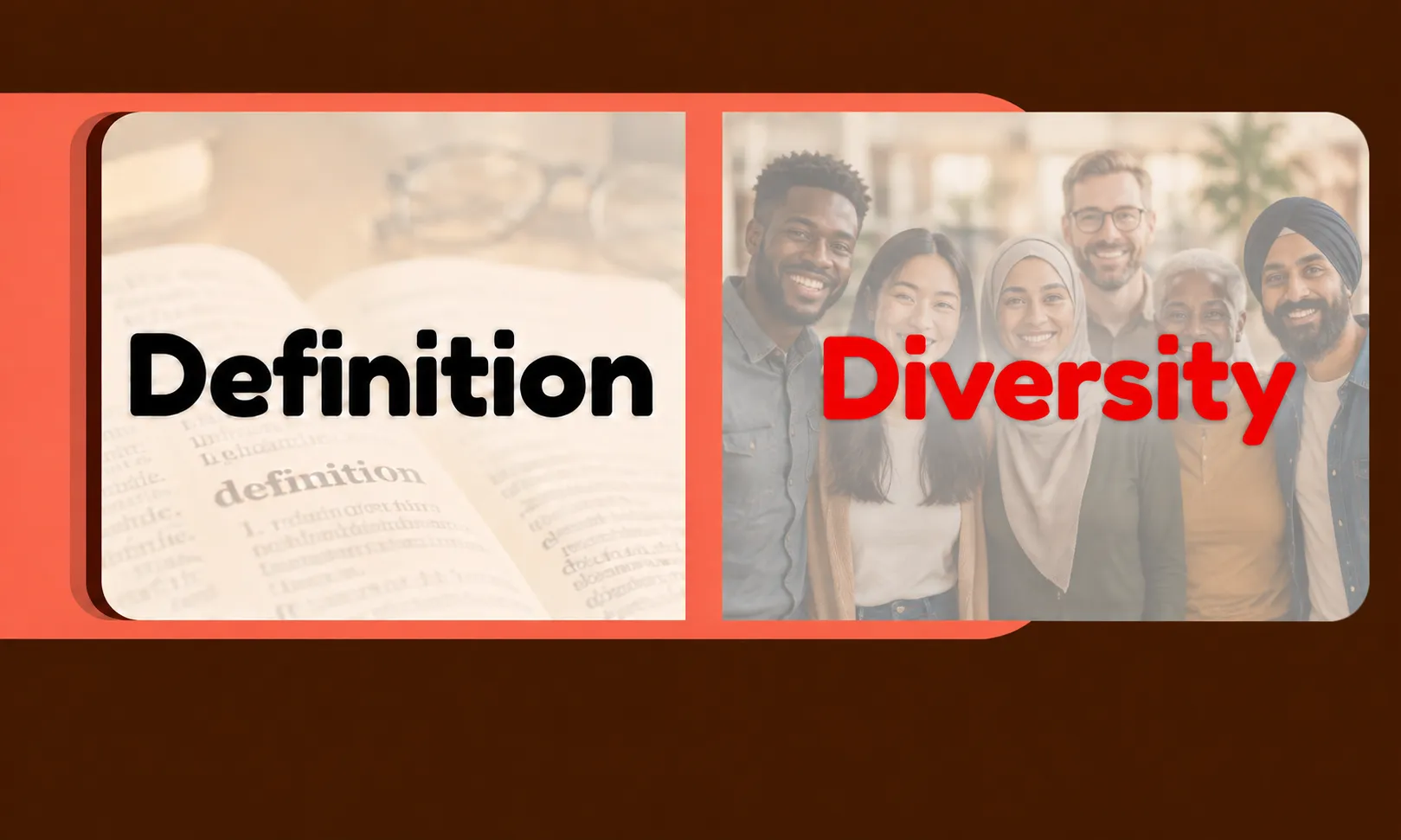
Diversity is a word used to describe the presence of different people, ideas, qualities, characteristics, or types within the same group or environment.
It can refer to differences in culture, background, age, language, experience, skills, opinions, abilities, or many other features. In simple terms, diversity means having variety instead of everything being the same.
People search for the diversity definition because the term appears in schools, workplaces, social media discussions, relationships, healthcare, science, and everyday conversations.
Its exact meaning can change slightly depending on the situation. A company may talk about diversity among employees, while a scientist may discuss genetic or biological diversity.
Understanding the word is useful because it helps people interpret conversations more accurately. It also makes it easier to understand related terms such as inclusion, variety, multiculturalism, representation, and equality.
This guide explains what diversity means, where the term comes from, how people use it online and professionally, and how it differs from similar words.
Meaning & Definition of Diversity
What Does Diversity Mean?
Diversity means the presence of differences, variety, or multiple types within a group, place, system, or collection.
A very simple diversity definition is:
Diversity = a mixture of different people, things, qualities, ideas, or characteristics.
For example, imagine a classroom containing students who speak different languages, come from different places, enjoy different activities, and have different experiences. That classroom can be described as diverse.
The term does not apply only to people. You might also hear someone talk about diversity in plants, animals, investments, opinions, products, or technology.
Simple Examples
A company might say:
“We value diversity in our workplace.”
This generally means the organization values having employees with different backgrounds, experiences, perspectives, or characteristics.
Someone might also say:
“The restaurant offers a diverse menu.”
Here, diversity simply means that the restaurant provides many different types of food.
Another example is:
“There is great diversity in wildlife in this region.”
In this sentence, diversity refers to the wide variety of living species found in the area.
Therefore, the main idea behind the word remains the same: difference and variety existing together.
Background of the Word Diversity
Where Does Diversity Come From?
The word diversity has historical roots connected with the idea of difference, variation, and being unlike something else. Over time, its usage became much broader.
Originally, the concept could describe differences between objects, conditions, characteristics, or groups. Today, it appears in many areas, including education, business, sociology, biology, technology, healthcare, and everyday communication.
How Its Modern Use Expanded
In modern professional settings, diversity commonly refers to differences among people.
These differences may involve:
- Cultural backgrounds
- Languages
- Ages
- Experiences
- Education
- Skills
- Abilities
- National backgrounds
- Ways of thinking
- Personal perspectives
However, diversity itself does not automatically mean that every person receives the same opportunities or feels equally included. That is why the word often appears alongside terms such as inclusion, equity, belonging, and representation.
For example, an organization may have a diverse workforce but still need policies that ensure employees can participate fairly.
The meaning has therefore developed from simply describing differences to becoming part of wider discussions about how different people and perspectives interact within society.
Diversity in Different Contexts
Diversity in Everyday Conversations
In everyday speech, diversity usually means having plenty of variety.
For example:
“I like the diversity of restaurants in this city.”
The speaker means there are many different kinds of restaurants available.
Diversity in Education
Schools and universities may use the word when discussing students with different cultures, experiences, learning styles, languages, or backgrounds.
A diverse classroom can expose students to different ideas and perspectives.
Diversity in the Workplace
In professional environments, diversity commonly describes differences among employees.
These may include differences in:
- Professional experience
- Age
- Background
- Education
- Skills
- Culture
- Communication style
- Perspective
Companies may discuss diversity when talking about recruitment, teamwork, leadership, company culture, or employee development.
Diversity on Social Media
Online, the word may appear in discussions about entertainment, workplaces, communities, advertising, education, or representation.
Someone might post:
“I love the diversity of ideas in this community.”
This means people are sharing many different perspectives rather than repeating the same viewpoint.
Diversity Meaning in Chat, WhatsApp, Instagram, and TikTok
Meaning in Text Messages
Diversity does not normally have a special slang meaning in texting.
If someone writes:
“Our group needs more diversity.”
they usually mean the group would benefit from greater variety in its members, experiences, viewpoints, or characteristics.
The exact meaning depends heavily on what the conversation is about.
Meaning on WhatsApp
On WhatsApp, diversity may appear in school groups, office discussions, community chats, or casual conversations.
Example:
Person A: “Everyone suggested the same idea.”
Person B: “We need more diversity of thought 😂.”
Here, the phrase means they want a wider range of ideas.
Meaning on Instagram
Instagram users may discuss diversity in fashion, beauty, travel, entertainment, workplaces, or communities.
For example:
“Love seeing more diversity in this campaign ❤️.”
The person may be expressing appreciation for a broader range of people or backgrounds being represented.
Meaning on TikTok
On TikTok, the word can appear in videos about culture, entertainment, education, careers, relationships, and social issues.
Creators may also talk about diversity of content, meaning they want to post different types of videos instead of focusing on one subject.
The surrounding sentence is therefore important when deciding what diversity means online.
Diversity Meaning in Physics, Medical, and Aircraft Terminology
Diversity in Physics and Technical Fields
Diversity is not usually one single physics concept with one universal definition. However, scientists and engineers may use the general idea of diversity when discussing variation within systems, measurements, signals, materials, or physical conditions.
In communication engineering, for example, diversity techniques can involve using different signal paths, frequencies, antennas, or methods to improve communication reliability.
Therefore, in technical contexts, diversity often refers to using or observing multiple alternatives rather than relying on one condition or source.
Diversity in Medical Terminology
In medicine and health research, the word commonly refers to variation within people, biological systems, populations, microorganisms, or genetic characteristics.
For example, researchers may discuss:
Genetic diversity — differences in genetic characteristics.
Microbial diversity — the variety of microorganisms within an environment, including areas of the human body.
Patient diversity — variation among patients in background, age, medical history, lifestyle, or other characteristics.
The meaning depends on what researchers or medical professionals are studying.
Diversity in Aviation and Aircraft Discussions
Diversity is also not a standard standalone aircraft control term.
In aviation conversations, however, people may discuss fleet diversity, which means an airline operates different aircraft models or families.
For example, an airline using several different aircraft types has greater fleet diversity than an airline operating only one aircraft family.
Technical communication systems used in aviation may also use diversity methods to improve signal reliability.
Common Misconceptions About Diversity
Diversity Means Only Race or Culture
One common misunderstanding is that diversity refers only to racial or cultural differences.
Those can be forms of diversity, but the idea is much broader.
People can differ in age, education, experience, skills, language, thinking style, professional knowledge, ability, location, and many other ways.
Diversity Means Everyone Is Completely Different
A group does not need every person to be completely different from everyone else to be considered diverse.
It simply needs meaningful variation within the group.
Diversity and Equality Mean the Same Thing
These words are related but different.
Diversity describes the presence of differences.
Equality generally concerns people receiving equal treatment, rights, or opportunities.
A group can therefore be diverse without necessarily achieving equality in every situation.
Diversity Automatically Creates Inclusion
Having different people present does not automatically mean everyone feels welcome or included.
Diversity describes who or what is present, while inclusion concerns participation and involvement.
Understanding these distinctions helps prevent confusion when the terms appear together.
Similar Terms & Alternatives to Diversity
Variety
Variety is one of the closest general alternatives.
Example:
“The shop has a variety of products.”
It means many different types are available.
Difference
Difference describes the way two or more things are not exactly alike.
Diversity usually refers to the presence of many differences together.
Inclusion
Inclusion means creating an environment where people can participate, contribute, and feel accepted.
It is often connected with diversity but does not mean exactly the same thing.
Representation
Representation refers to whether particular groups, perspectives, experiences, or characteristics are visibly present.
Multiculturalism
Multiculturalism usually refers more specifically to different cultures existing within a society, organization, or community.
Variation
Variation describes differences or changes between things within the same general category.
For scientific writing, variation may sometimes be more precise than diversity, depending on the context.
How to Respond When Someone Mentions Diversity
In Casual Conversation
Your response should depend on what the person means.
If someone says:
“Our team has great diversity.”
You could respond:
“That can bring a lot of different perspectives to the group.”
When the Meaning Is Unclear
You can simply ask:
“Do you mean diversity in backgrounds, experiences, or ideas?”
This is useful because the word covers several kinds of differences.
In Professional Conversations
A workplace discussion may require a more thoughtful response.
For example:
“Which areas of diversity are we focusing on?”
or:
“How does the organization support inclusion alongside diversity?”
These questions help clarify the purpose of the discussion.
In Online Discussions
Avoid assuming what another person means from a single post.
The word may refer to cultural diversity, diversity of opinion, content variety, workforce diversity, or something completely different.
Reading the surrounding context usually gives the clearest answer.
Differences Between Diversity and Similar Words
Diversity vs Inclusion
Diversity concerns differences within a group.
Inclusion concerns whether people can meaningfully participate within that group.
Example:
A workplace may hire employees with many different backgrounds, creating diversity. If employees are encouraged to contribute and have access to opportunities, that relates more closely to inclusion.
Diversity vs Equality
Diversity asks:
“What differences are present?”
Equality is more concerned with:
“Are people receiving equal treatment or opportunities?”
The concepts can be discussed together, but they should not be treated as identical.
Diversity vs Variety
These words can overlap.
Variety is often used for objects, choices, products, food, entertainment, or experiences.
Diversity is especially common when talking about groups, ecosystems, workplaces, communities, perspectives, and biological systems.
For example:
“A variety of cakes” sounds natural.
“A diverse workforce” sounds more natural than “a variety of workforce.”
Diversity vs Difference
A difference may describe one contrast between two things.
Diversity describes a broader collection containing multiple differences.
Relevance of Diversity in Online Conversations & Dating Apps
Diversity in Online Communities
Online communities bring together people from different locations, professions, age groups, cultures, interests, and experiences.
Because of this, diversity frequently appears in conversations about online communities.
A forum might have diversity of opinion, while a social media platform may contain diversity in creators, topics, and content styles.
Different perspectives can make discussions broader, although differences can also create disagreements. Clear communication becomes especially important when people interpret words, jokes, experiences, or cultural references differently.
Diversity on Dating Apps
On dating platforms, diversity may refer to the wide range of people using an app.
Users may differ in personality, hobbies, careers, languages, cultures, lifestyles, relationship goals, and personal preferences.
Someone saying:
“I like the diversity on this dating app.”
may simply mean they are seeing a broader range of people and profiles.
It does not necessarily refer to one particular personal characteristic.
Why Context Matters Online
Online conversations are often short, so words can easily be misunderstood.
If someone mentions diversity without explaining what type they mean, looking at the surrounding discussion is important.
They may be talking about people, opinions, cultures, interests, experiences, content, or professional backgrounds.
Conclusion
Diversity means the presence of different people, characteristics, ideas, experiences, types, or qualities within one group or environment.
The simplest way to understand the diversity definition is to think of it as variety created by meaningful differences.
The word can describe people in workplaces and classrooms, but its use extends far beyond social situations. Scientists may discuss biological or genetic diversity, companies may discuss diversity of experience, engineers may use diversity techniques in communication systems, and airlines may discuss fleet diversity.
It is also important to distinguish diversity from related ideas such as inclusion, equality, representation, variety, and multiculturalism. These concepts often appear together but describe different things.
Whether you encounter the word in a WhatsApp message, TikTok discussion, professional meeting, scientific article, or dating app conversation, context determines its exact meaning.
Understanding that context makes the term much easier to interpret and use naturally.