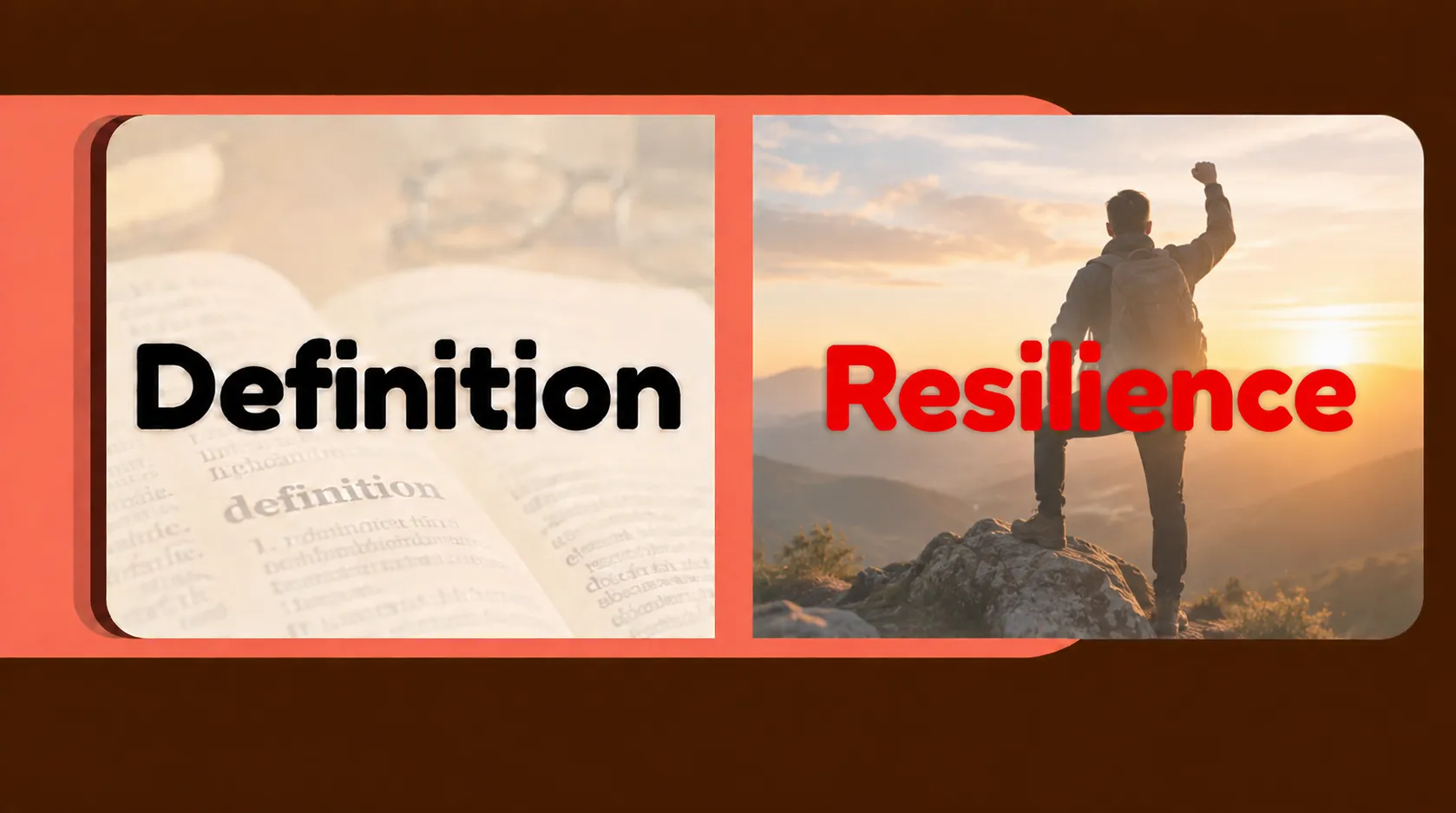
Resilience is a word used to describe the ability to recover, adapt, or continue moving forward after difficulties, pressure, change, or damage.
People often search for the resilience definition because the term appears in everyday conversations, psychology, education, workplaces, relationships, social media, science, medicine, engineering, and many other fields.
In simple language, resilience is about how well a person, object, system, or organization responds when something difficult happens. A resilient person may experience disappointment but find a way to recover.
A resilient material may bend or absorb force and then return toward its original form. A resilient business may adjust when the market changes.
The exact meaning depends on the context in which the word appears. Understanding these different uses makes it easier to recognize what someone means when they talk about emotional resilience, physical resilience, workplace resilience, or resilient systems.
Meaning & Definition of Resilience
Simple Meaning
Resilience means the ability to recover, adapt, or remain strong when facing difficulty, pressure, damage, or unexpected change.
The word can describe people, communities, organizations, materials, systems, relationships, and even technology.
For example:
- “Her resilience helped her recover after a difficult year.”
- “The company showed resilience during the economic slowdown.”
- “This material has excellent resilience after compression.”
- “Building resilience can help people manage stressful situations.”
When resilience describes a person, it does not necessarily mean that the person never feels sadness, stress, fear, disappointment, or frustration. Instead, it describes the ability to respond to those experiences and continue functioning, learning, adapting, or recovering.
Resilience in Everyday Language
In ordinary conversation, the word often suggests inner strength and adaptability.
Someone might say:
“She has incredible resilience.”
This usually means the person has experienced challenges but continues to move forward.
Resilience can also describe the ability to adjust rather than simply resist change. Sometimes being resilient means changing a plan, asking for help, learning a different skill, or finding a new solution.
Background of the Word Resilience
Where the Meaning Comes From
The idea behind resilience has long been connected with bouncing back, returning, recovering, and responding to pressure.
Over time, the word developed broader meanings. It became useful not only for describing physical materials but also for explaining how people, communities, businesses, ecosystems, and technological systems handle disruption.
Today, resilience is commonly discussed in psychology, personal development, education, management, healthcare, engineering, environmental studies, and emergency planning.
How the Modern Meaning Developed
In modern conversation, resilience is especially associated with coping with difficult experiences.
For example, a student who struggles with an exam but changes study methods and improves may be described as resilient.
A business that loses an important customer but finds new markets can also show resilience.
The important idea is not simply surviving a challenge. Resilience usually involves some combination of recovery, adaptation, persistence, learning, or continued functioning.
Usage of Resilience in Different Contexts
Everyday Conversations
People commonly use resilience when talking about personal challenges.
Examples include:
“Your resilience through all of this is inspiring.”
“She showed a lot of resilience after losing the competition.”
“He developed resilience by learning from difficult experiences.”
In these examples, resilience refers to emotional or practical recovery.
Social Media
On social media, the word often appears in motivational posts, captions, personal stories, fitness content, career discussions, and mental wellness conversations.
A caption might say:
“Growth requires patience, courage, and resilience.”
Another person might post:
“Building resilience one difficult day at a time.”
The word often carries a positive tone because it highlights recovery and continued effort.
Professional Fields
In workplaces, resilience can describe employees, teams, businesses, supply chains, technology, or entire organizations.
A resilient team can adjust when deadlines, priorities, leadership, or market conditions change.
Business resilience usually refers to an organization’s ability to continue important operations, respond to disruption, and recover effectively.
Resilience Meaning in Chat, WhatsApp, Instagram, and TikTok
Meaning in Text Messages
Resilience does not normally function as internet slang or an abbreviation. In messages, it usually keeps its standard meaning.
If someone texts:
“I really admire your resilience.”
They are likely saying that they respect the way you handled difficulties or recovered from them.
Another message could be:
“You’ve shown so much resilience lately.”
This usually communicates encouragement or recognition.
WhatsApp and Instagram Meaning
On WhatsApp, resilience may appear in personal conversations about work, family, education, relationships, or difficult life events.
On Instagram, it commonly appears in inspirational captions and self-improvement content.
For example:
“Strength isn’t avoiding problems. It’s building resilience through them.”
TikTok Usage
On TikTok, the word may appear in videos about personal growth, fitness, careers, relationships, study motivation, lifestyle changes, and emotional wellbeing.
The basic idea remains similar: facing something difficult, adapting, and continuing forward.
Resilience in Physics, Medical, and Aircraft Terminology
Resilience in Physics and Materials
In physics and materials-related discussions, resilience has a more technical meaning.
It can describe a material’s ability to absorb energy while being deformed and release that energy when the force is removed, provided the material remains within its elastic range.
A simple example is a material that temporarily changes shape under pressure but can return toward its previous shape afterward.
This technical use is different from emotional resilience, although both meanings share the general idea of responding to pressure and recovering.
Resilience in Medical and Health Contexts
In healthcare and psychology-related discussions, resilience generally describes a person’s ability to adapt to stress, illness, major changes, trauma, or other challenges.
It does not mean ignoring pain or pretending that difficult experiences are easy.
Instead, resilience can involve coping skills, supportive relationships, problem-solving, healthy routines, flexibility, and recovery.
The exact meaning may vary depending on whether the discussion involves physical recovery, psychological wellbeing, community health, or healthcare systems.
Resilience in Aircraft and Aviation
In aircraft and aviation contexts, resilience usually refers more broadly to the ability of structures, systems, organizations, or operations to withstand disruption and continue functioning safely.
For example, engineers may discuss resilient systems that can respond effectively when certain components fail or unexpected conditions occur.
Operational resilience can also describe how aviation organizations prepare for and recover from disruptions.
Here, resilience is generally a broader engineering or operational concept rather than the name of one particular aircraft component.
Common Misconceptions About Resilience
Resilience Does Not Mean Feeling Nothing
A common misunderstanding is that resilient people never become upset.
That is not what the word means.
A person can experience sadness, disappointment, uncertainty, or stress while still being resilient.
Resilience describes how someone adapts and responds rather than whether difficult feelings appear.
Resilience Is Not the Same as Ignoring Problems
Ignoring a problem may delay dealing with it. Resilience often involves recognizing a problem and finding a realistic way to manage it.
For example, asking for support can be an act of resilience.
Changing a strategy can also demonstrate resilience.
Resilience Does Not Always Mean Returning to Exactly the Same State
Sometimes people change after difficult experiences.
They may develop new priorities, routines, skills, or perspectives.
Therefore, resilience can involve adapting to a new situation rather than returning completely to how things were before.
Similar Terms and Alternatives to Resilience
Common Alternatives
Several words have meanings related to resilience, although they are not perfect replacements.
Common alternatives include:
- Strength
- Adaptability
- Endurance
- Persistence
- Toughness
- Flexibility
- Recovery
- Determination
- Fortitude
- Perseverance
The best alternative depends on the situation.
For example, adaptability emphasizes adjusting to change, while endurance emphasizes continuing through difficulty.
Related Expressions
People may also use phrases such as:
“Bouncing back”
“Staying strong”
“Getting back on your feet”
“Adapting to change”
“Recovering from setbacks”
These expressions often communicate parts of the resilience concept in simpler everyday language.
How to Respond When Someone Mentions Resilience
Responding to a Compliment
If someone tells you:
“I admire your resilience.”
You could respond:
“Thank you. That means a lot.”
Or:
“Thank you. It has been challenging, but I’m learning from it.”
Another natural response is:
“I appreciate that. I’m taking things one step at a time.”
Responding When Someone Is Struggling
If another person talks about trying to stay resilient, a supportive reply could be:
“You’ve handled a lot. I hope things become easier soon.”
Or:
“Keep going at your own pace. You don’t have to solve everything at once.”
The best response depends on the relationship, situation, and tone of the conversation.
Differences Between Resilience and Similar Words
Resilience vs Strength
Strength is a broad word that can describe physical, emotional, or mental power.
Resilience specifically focuses more on handling pressure, recovering from setbacks, or adapting to change.
A person can be strong in many ways, while resilience emphasizes response and recovery.
Resilience vs Perseverance
Perseverance means continuing to work toward something despite difficulty.
Resilience includes continuing, but it also emphasizes recovery and adaptation.
For example, continuing to study after failing a test may show perseverance. Recovering emotionally, changing your study method, and trying again can demonstrate resilience.
Resilience vs Endurance
Endurance is the ability to continue through strain or difficulty over time.
Resilience focuses more strongly on adapting or recovering after pressure.
Resilience vs Adaptability
Adaptability means being able to adjust when conditions change.
It is closely connected with resilience, but resilience can include recovery from setbacks as well as adjustment.
Resilience vs Toughness
Toughness suggests being strong enough to handle difficult situations.
Resilience is broader because someone may respond effectively through flexibility, support, rest, learning, or adjustment rather than simply being tough.
Relevance of Resilience in Online Conversations and Dating Apps
Online Conversations
Resilience has become a common word in online discussions about careers, relationships, personal development, fitness, education, and lifestyle.
People often use it when describing how they handled a difficult experience or what they learned from it.
Someone might write:
“This year taught me patience and resilience.”
Another person might say:
“Career setbacks helped me build resilience.”
In these situations, the word communicates growth through difficulty.
Resilience on Dating Apps
On dating apps, resilience may appear in profiles or conversations when someone describes their personality, values, or life experiences.
A person might write:
“I value kindness, humor, honesty, and resilience.”
Here, resilience usually suggests that the person appreciates emotional strength and adaptability.
If someone says they have become more resilient after past relationship experiences, they may mean they learned how to recover, communicate better, establish boundaries, or approach relationships differently.
However, the meaning should always be understood from the surrounding conversation. The word itself does not automatically reveal exactly what experiences someone has had.
Why Resilience Matters in Modern Life
Handling Change
Modern life can change quickly. Work, education, technology, relationships, finances, and personal responsibilities can all bring unexpected situations.
Resilience helps describe the ability to respond without becoming permanently stuck when plans change.
Learning From Setbacks
Mistakes and setbacks are common parts of learning.
Resilience allows people to treat difficulty as something they can respond to rather than automatically viewing it as the end of progress.
For example, someone rejected from a job may improve their résumé, build another skill, and continue applying.
Supporting Long-Term Growth
Resilience can develop over time.
People may strengthen it through experience, supportive relationships, realistic goals, problem-solving, healthy habits, reflection, and learning how to adjust when circumstances change.
The goal is not to become unaffected by every difficulty. Instead, resilience is about developing ways to navigate difficult situations and continue moving forward.
Conclusion
Resilience is the ability to recover, adapt, and continue after experiencing difficulty, pressure, disruption, or change. While the word is commonly associated with emotional strength, its meaning reaches much further.
It can describe individuals, relationships, businesses, communities, materials, healthcare systems, technology, engineering systems, and aviation operations.
Understanding the resilience definition becomes easier when you focus on three basic ideas: pressure, adaptation, and recovery. Something challenging happens, a response is needed, and the person or system finds a way to adjust or continue functioning.
Resilience should not be confused with ignoring problems, hiding emotions, or pretending that difficult situations do not matter. People can experience stress or disappointment and still respond resiliently.
Whether the term appears in a conversation, Instagram caption, workplace discussion, medical context, scientific explanation, or dating profile, its central idea remains similar: the capacity to respond effectively when circumstances become difficult or uncertain.

Alex Chuckles is a comedy writer and humor enthusiast who loves creating funny and entertaining content for readers worldwide. He is passionate about spreading laughter and making people smile through creative jokes and lighthearted stories.