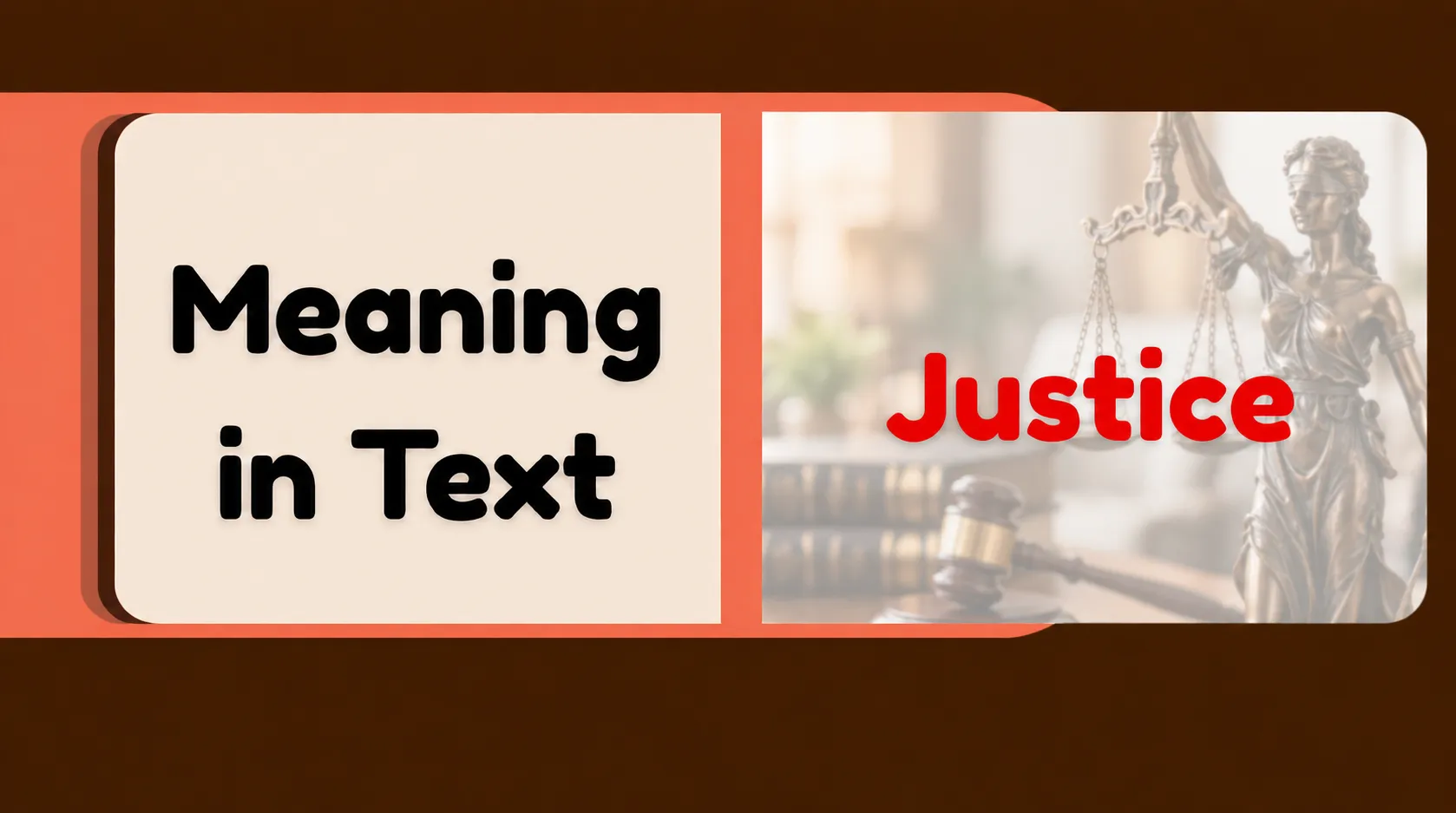
Justice is one of those words that sounds simple but carries a much deeper meaning. In everyday life, people usually connect justice with fairness, equal treatment, laws, rights, and receiving what is deserved.
However, the meaning can change slightly depending on whether someone is discussing relationships, society, courts, workplaces, social media, or personal behavior.
People often search for the justice definition because they want to understand how the word is used beyond legal situations.
Someone may see it in a news discussion, Instagram caption, classroom lesson, dating conversation, or workplace debate. In each case, the central idea remains connected to fairness and proper treatment.
Understanding justice also helps explain related concepts such as equality, fairness, accountability, rights, and responsibility. This guide explores its definition, background, everyday uses, online meaning, common misconceptions, similar words, and how it differs from other closely related terms.
Meaning & Definition of Justice
What Does Justice Mean?
Justice means treating people fairly and making decisions according to reasonable rules, rights, responsibilities, or moral principles. It can also refer to correcting something that is wrong or ensuring that a person receives fair treatment.
In simple words:
Justice means fairness in action.
For example, if two employees perform the same work under the same conditions, treating one unfairly without a reasonable explanation could be considered unjust. Justice would involve examining the situation and making a fair decision.
The word is commonly connected with courts because legal systems are designed to determine responsibility, protect rights, settle disputes, and apply laws. However, justice is much broader than courtrooms.
Justice in Everyday Life
Justice can appear in ordinary situations such as:
- Giving everyone a fair chance to speak.
- Correcting an unfair decision.
- Returning something that belongs to someone else.
- Holding a person responsible for harmful behavior.
- Applying the same reasonable rules to everyone.
Justice does not always mean that everyone receives exactly the same thing. Sometimes fairness requires considering different circumstances.
For instance, giving every student the same support may sound equal, but one student may require extra assistance. Justice can involve providing what is reasonably needed rather than simply making everything identical.
Background of Justice
Where Does the Idea Come From?
The idea of justice is extremely old. Human societies have long developed rules about acceptable behavior, responsibilities, punishment, property, agreements, and relationships.
As communities became larger, formal laws and institutions developed to resolve conflicts and protect social order. Philosophers also began asking deeper questions about justice.
They explored ideas such as:
- What makes a rule fair?
- Should everyone receive identical treatment?
- What should happen when someone causes harm?
- What rights should individuals have?
- How should disagreements be resolved?
These questions helped shape legal, moral, and social discussions about justice.
Justice as a Social Principle
Justice is not limited to punishment. It can also involve opportunity, responsibility, protection, restoration, and fairness.
Some discussions focus on distributive justice, which looks at how opportunities, responsibilities, or resources are shared.
Others discuss procedural justice, which focuses on whether the process used to reach a decision is fair.
There is also restorative justice, which may focus on acknowledging harm, repairing damage, and rebuilding relationships where appropriate.
Although these approaches differ, they share a concern with fair treatment and responsible decision-making.
Usage of Justice in Different Contexts
Justice in Everyday Conversations
People commonly use justice when talking about situations they believe should be corrected.
Someone might say:
“Finally, she got justice.”
This usually means the person received fair treatment after previously experiencing something unfair.
Another person might say:
“I just want justice for what happened.”
Here, justice may mean accountability, recognition, compensation, correction, or another fair response.
Justice on Social Media
Online, the word often appears in posts discussing unfair treatment, public controversies, personal experiences, or support for someone.
Expressions such as “justice for…” are common on social media. They are typically used when people believe someone, something, or even a fictional character has been treated unfairly.
The phrase can be serious or humorous depending on context.
For example:
“Justice for the last slice of pizza!”
This is clearly playful rather than a legal demand.
Justice in Professional Fields
In professional environments, justice may relate to fair policies, equal opportunities, transparent procedures, employee treatment, ethical standards, and accountability.
A workplace may promote organizational justice by ensuring that decisions about promotions, workloads, discipline, and recognition follow understandable and consistent procedures.
Justice Meaning in Chat, WhatsApp, Instagram, and TikTok
Meaning in Text and Chat
In text conversations, justice usually keeps its ordinary meaning of fairness or making something right.
Example:
Person A: They finally admitted the mistake.
Person B: Good. Justice served.
Here, “justice served” means that the situation ended in a way the speaker considers fair.
The word does not normally function as a special texting abbreviation.
Justice on WhatsApp
On WhatsApp, people may use the word seriously when discussing relationships, family matters, work situations, or news.
It can also be used dramatically for humor.
Example:
“You ate my fries yesterday. Today I took your dessert. Justice.”
The speaker jokingly describes the situation as restoring fairness.
Justice on Instagram and TikTok
Instagram and TikTok users frequently use phrases such as:
- Justice served
- We want justice
- Justice for them
- Finally some justice
- Where is the justice?
The exact meaning depends heavily on the video, caption, or conversation.
Some posts discuss serious matters, while others use the term as a joke, meme, or exaggerated reaction.
Justice Meaning in Physics, Medical, and Aircraft Terminology
Is Justice a Physics Term?
Justice is not generally a standard technical term in physics.
Physics uses concepts such as force, energy, motion, mass, momentum, gravity, and equilibrium. While someone could metaphorically describe balance or equilibrium as “justice,” this would not be the scientific definition.
For example, saying “physics delivers justice” after an object falls would simply be humorous or figurative language.
Justice in Medical Terminology
Justice is also not normally a medical diagnosis, treatment, anatomical term, or medical procedure.
However, healthcare discussions may involve justice as an ethical principle.
In medical ethics, justice can refer to fair treatment, responsible distribution of healthcare resources, reasonable access to care, and avoiding unfair discrimination between patients.
Therefore, justice can be relevant to medicine without being a medical condition itself.
Justice in Aircraft Terminology
Justice is not a standard technical aircraft or aviation term either.
Aviation terminology normally includes words connected with navigation, flight controls, aircraft systems, weather, airports, communication, safety, and operations.
If “Justice” appears around aviation, it may be a name, call sign, project title, organization, or ordinary English word rather than a universal aircraft term.
Common Misconceptions About Justice
Justice Always Means Punishment
One common misunderstanding is that justice simply means punishing someone.
Punishment can sometimes be part of a justice system, but justice itself is broader.
It may involve correcting an error, protecting someone’s rights, returning property, providing compensation, establishing responsibility, or repairing harm.
Justice and Revenge Are the Same
Justice and revenge are not identical.
Revenge is usually motivated by the desire to personally hurt or punish someone because of a perceived wrong.
Justice generally focuses on fairness, accountability, rules, rights, and reasonable consequences.
Justice Means Everyone Gets Exactly the Same Thing
Equal treatment can support justice, but fairness does not always require identical outcomes.
Different situations may require different responses.
A fair system considers relevant facts rather than blindly treating every situation as if it were identical.
Similar Terms & Alternatives to Justice
Fairness
Fairness is probably the closest everyday alternative.
It describes treatment that is reasonable, balanced, and free from improper favoritism.
Equality
Equality means treating people equally or giving them equal status, rights, or opportunities in a particular context.
Equality and justice often overlap, but they are not completely interchangeable.
Accountability
Accountability means being responsible for decisions, actions, or consequences.
Justice may require accountability when someone has caused harm or violated a rule.
Equity
Equity focuses on fairness while recognizing that people may have different circumstances or needs.
Impartiality
Impartiality means making decisions without unfair favoritism or bias.
It is especially important in situations where someone must judge between competing sides.
How to Respond to Justice in Conversation
When Someone Says “I Want Justice”
The best response depends on the situation.
If someone is discussing a serious personal experience, a thoughtful response might be:
“I understand why fair treatment matters to you.”
You can also ask:
“What outcome would feel fair in this situation?”
This encourages the person to explain whether they mean an apology, correction, accountability, compensation, or another response.
When It Is Used Humorously
If a friend says:
“You stole my snack, so I stole yours. Justice!”
You can respond playfully:
“Fair enough. Balance has been restored.”
Context is important. A humorous response may be appropriate for a joke but unsuitable when someone is discussing a serious injustice.
Differences Between Justice and Similar Words
Justice vs Fairness
Fairness describes whether treatment or a decision seems reasonable.
Justice often involves a broader system of rights, rules, responsibilities, and consequences.
Fairness can therefore be part of justice.
Justice vs Equality
Equality generally focuses on equal treatment, rights, status, or opportunity.
Justice asks whether the overall treatment or outcome is fair considering the relevant circumstances.
Justice vs Revenge
Revenge is personal retaliation.
Justice ideally relies on fair principles, evidence, rules, accountability, and proportionate responses rather than personal anger.
Justice vs Law
Law and justice are closely connected but not identical.
A law is a formal rule established by an authority.
Justice is the broader concept of fairness and rightful treatment.
Discussions about justice sometimes involve asking whether particular rules or procedures achieve fair outcomes.
Relevance of Justice in Online Conversations & Dating Apps
Justice in Online Discussions
Justice appears frequently in online conversations because social media gives people a place to share experiences, opinions, complaints, and reactions.
Users may discuss fairness in workplaces, schools, relationships, entertainment, sports, communities, or public issues.
The phrase “justice for” has also become a flexible internet expression.
Someone might seriously demand fair treatment, while another person may jokingly write:
“Justice for people who always get the smallest pizza slice.”
The surrounding context tells you whether the statement is serious, sarcastic, or humorous.
Justice on Dating Apps
Justice is not common dating-app slang with a hidden romantic meaning.
However, people may mention justice when discussing personal values.
Someone could write that fairness, honesty, equality, or justice matters to them. This usually tells you something about the principles they value rather than communicating a secret dating code.
In conversations between partners, justice may also appear when discussing whether responsibilities, attention, expenses, or decisions are being handled fairly.
Healthy communication usually works better when both people explain what they actually consider fair instead of assuming they have exactly the same expectations.
Conclusion
Justice is a broad concept centered on fairness, rights, responsibility, and appropriate treatment. Although many people first associate it with courts and laws, its meaning reaches far beyond legal systems.
Justice can appear in friendships, workplaces, relationships, schools, healthcare ethics, social media discussions, and ordinary daily decisions.
The simplest way to understand the justice definition is to think of it as an effort to make decisions and outcomes fair while respecting relevant rights, responsibilities, circumstances, and established principles.
It should also not be confused automatically with revenge, punishment, equality, or law. These ideas can be connected to justice, but each has its own meaning.
Whether the word appears in a serious discussion, WhatsApp message, Instagram caption, TikTok comment, or casual joke, context matters.
Understanding that context makes it much easier to recognize what someone means when they talk about justice.

Alex Chuckles is a comedy writer and humor enthusiast who loves creating funny and entertaining content for readers worldwide. He is passionate about spreading laughter and making people smile through creative jokes and lighthearted stories.